Buying a Home Is Getting More Affordable. Here's What's Actually Driving That Change.
If you've been sitting on the sidelines waiting for the math to finally work in your favor — pay attention. Because something has genuinely shifted.
Buying a home is getting more affordable. Not overnight, not dramatically, but consistently — and in a way that's starting to make a real difference for buyers who felt completely priced out just a year or two ago.
Here's How We Measure "Affordable" — And Where We Stand
The standard benchmark for housing affordability is spending 30% or less of your monthly household income on housing costs — mortgage payment, taxes, insurance, and basic maintenance included.
For the past few years, buyers were well above that threshold. The math simply didn't work for a lot of people, and that's not an exaggeration — it's what the data showed.
But that's changing. Zillow research shows it's now taking a smaller share of a typical household's income to buy a home than it did just a couple of years ago:
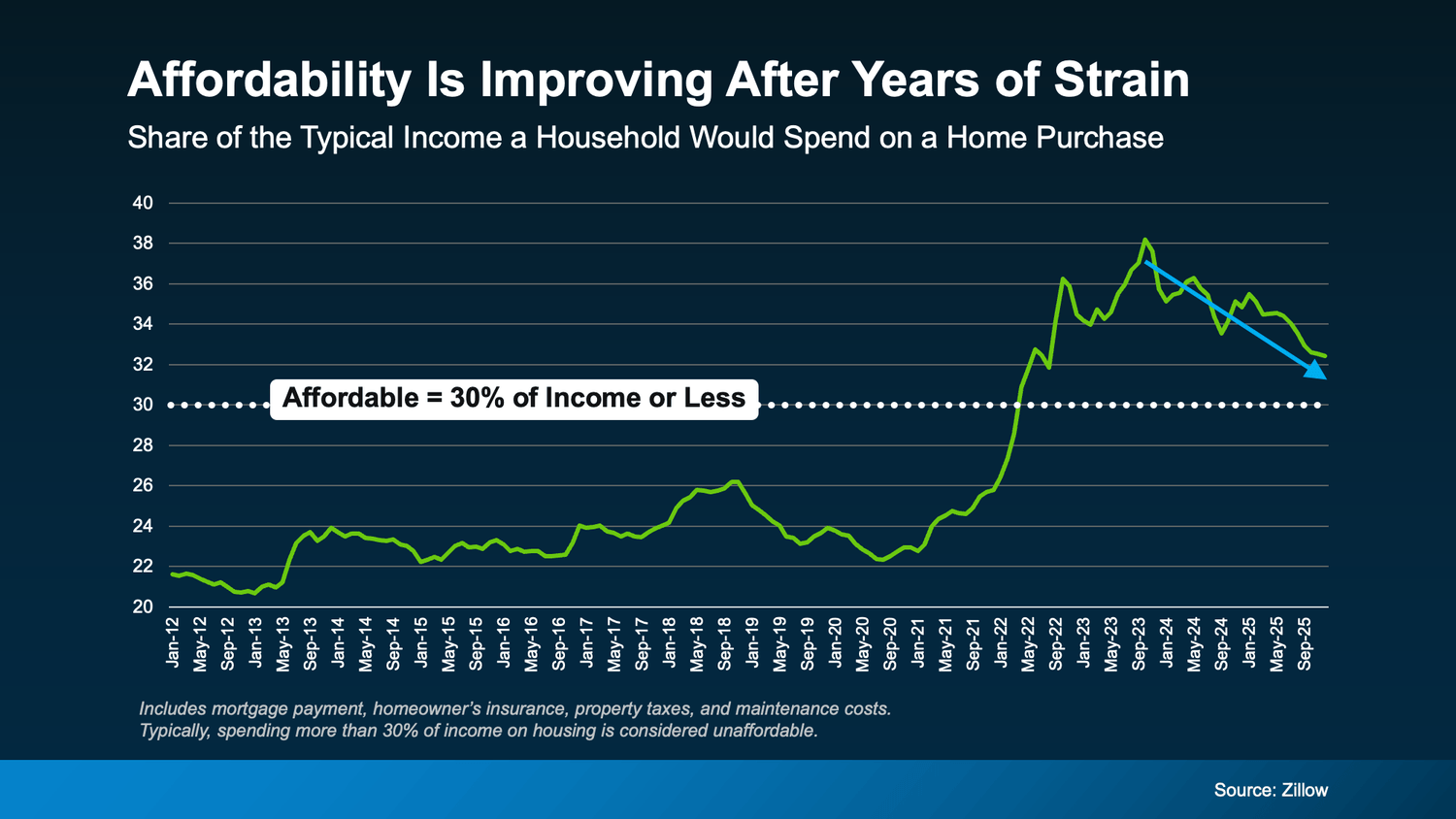
We're not all the way back to that 30% threshold yet — affordability is still a real challenge, especially in high-cost markets like Southern California. But the direction has changed. And direction matters.
Three Things Are Working in Buyers' Favor Right Now
This improvement isn't happening because of one big change. It's the result of three separate trends all moving in the same direction at the same time — and that combination is meaningful.
1. Mortgage rates have come down.
Rates are near their lowest level in more than three years — roughly a full percentage point lower than where they were at their peak.
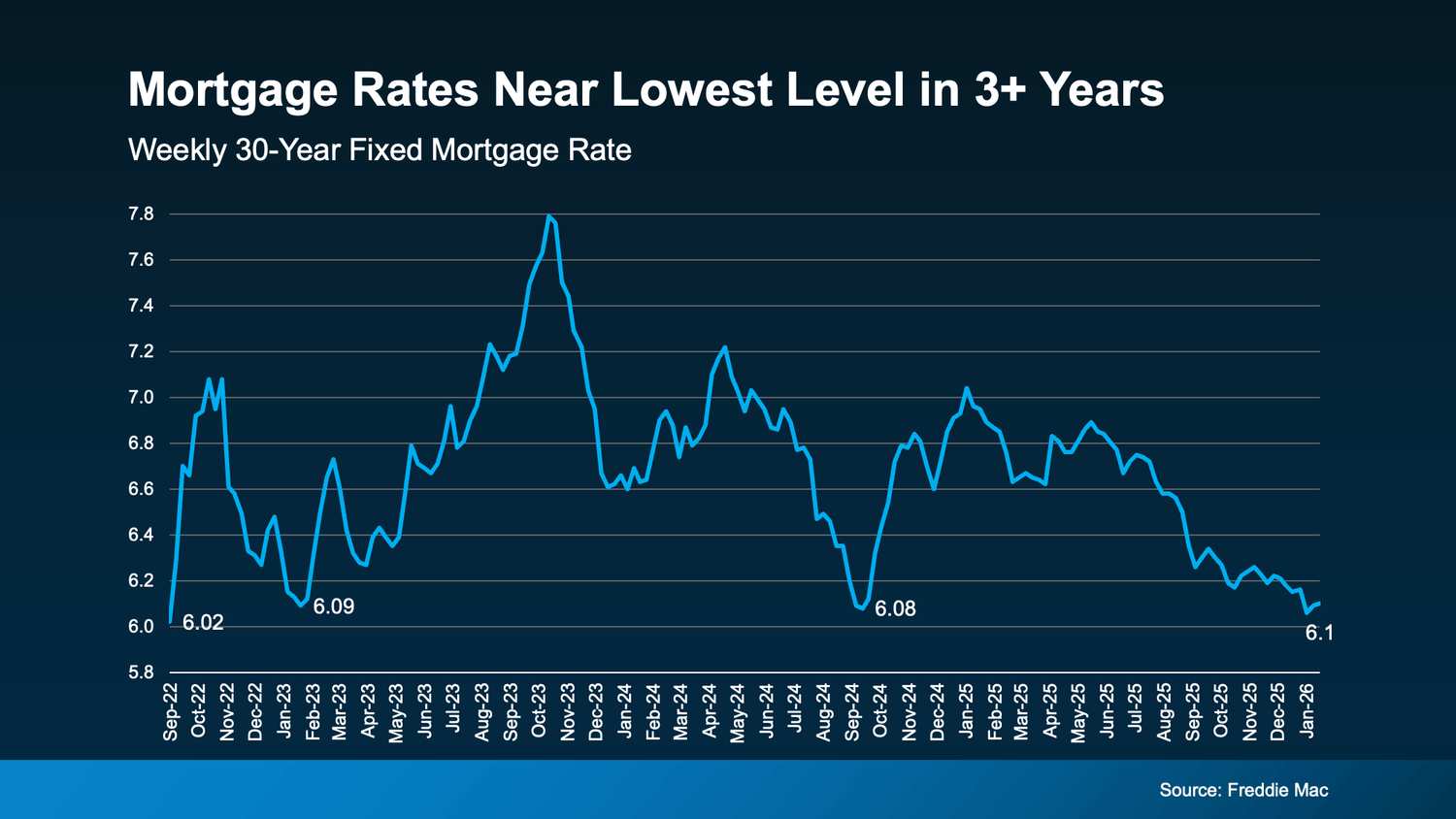
That drop directly reduces monthly payments. On a $500,000 loan, a one-point reduction in rate is hundreds of dollars a month — and thousands of dollars a year. For buyers in Rancho Cucamonga or anywhere in the Inland Empire where loan amounts in that range are common for entry-level purchases, that improvement is real and tangible.
2. Home price growth has slowed significantly.
Prices aren't falling nationally — but they're no longer racing away from buyers the way they were in 2021 and 2022. That matters because it means the target isn't moving as fast. Buyers can save toward a goal without feeling like the goalpost keeps shifting.
In practical terms: the home you had in mind six months ago is probably still in a similar price range today. That predictability is something buyers haven't had in years.
3. Wages are growing faster than home prices.
This is the one that doesn't get enough attention — and it might be the most important factor of all.
As First American's Chief Economist Mark Fleming explains, when income growth exceeds home price growth, house-buying power improves — even if mortgage rates don't decline meaningfully.
For 19 consecutive months, income growth has outpaced home price appreciation. That means every month that passes, the average buyer can afford a little more than they could the month before — independent of what rates are doing.
What This Looks Like Going Forward
Fleming describes the current moment well: affordability won't snap back overnight, but like a ship finally catching a steady tailwind, it's now sailing in the right direction.
That's the right mental model for buyers in 2026. This isn't a sudden correction that makes everything cheap. It's a gradual, consistent improvement — and economists expect it to continue throughout the year.
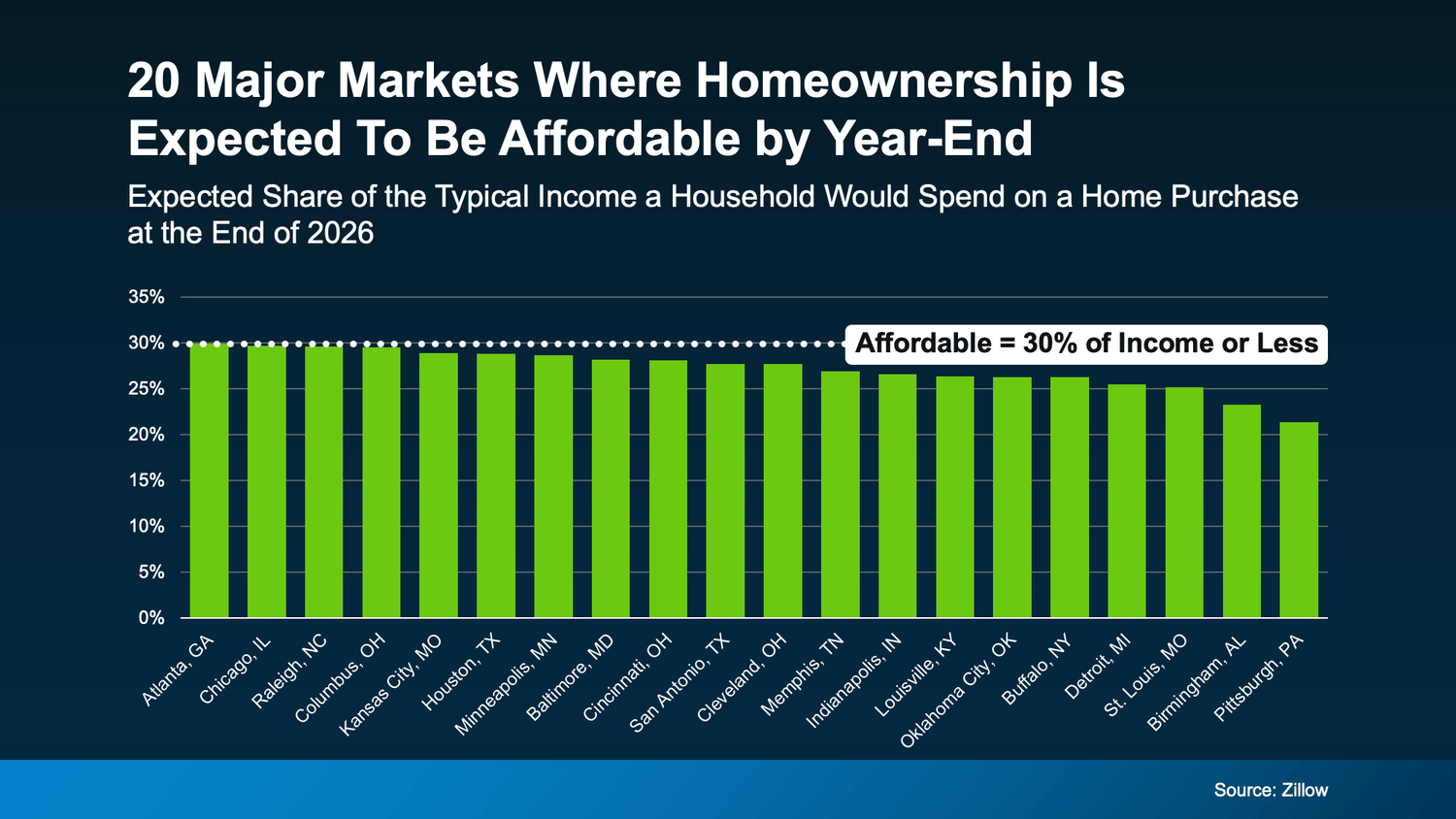
Zillow projects that some markets will fall back under the 30% affordability threshold by the end of this year:
What This Means Specifically in Southern California
Southern California isn't on the list of markets crossing back under the 30% threshold anytime soon — and being straight about that matters. LA County and coastal markets remain expensive relative to income, and that's not changing dramatically in 2026.
But "still expensive" and "getting more affordable" can both be true at the same time.
In Rancho Cucamonga and the broader Inland Empire, all three of these trends are playing out in a market that was already more accessible than coastal LA. Slower price growth, lower entry price points, and improving rates are combining to create real buying opportunities for first-time and move-up buyers who've been waiting for conditions to shift.
In Pasadena and LA County, the improvement is more incremental — but it's real. Buyers who ran the numbers 18 months ago and came up short should run them again. The answer might be different now.
The Risk of Waiting for "Perfect"
Here's something worth sitting with: affordability improving gradually is actually a signal to move, not a reason to wait longer.
When affordability improves, more buyers enter the market. More buyers mean more competition. More competition means upward pressure on prices. The window where you benefit from improved affordability without increased competition is exactly the window you're in right now.
Waiting for affordability to improve further might mean walking into a more competitive market that offsets whatever improvement you gained.
BOLD LA KEY TAKEAWAY
For the first time in several years, the forces that made buying feel impossible are easing — all at once. Rates are lower. Price growth has slowed. Incomes are growing faster than prices. That combination is real, it's measurable, and it's creating opportunities that didn't exist a year ago.
If you want to know specifically how these trends are showing up in your target market right now — and what the numbers actually look like for your situation — let's talk.
The math might work better than you think. Let's run it together.

Terrell Bolden
REALTOR®
DRE#02110062
Realty Connection Group
Los Angeles, California
(323) 471-5295
Terrell Bolden has always had a passion for real estate and how it can be used as a tool to enhance daily life.
-A safe place to call home and raise a family.
-An appreciating asset that can be passed to loved ones, or used to finance the vacation of your dreams.
Terrell understands that real estate opportunities are plentiful and is deeply committed to helping others achieve their real estate dreams throughout the greater Los Angeles area.
Disclaimer: The information contained, and the opinions expressed, in this article are not intended to be construed as investment advice. Terrell Bolden, Realty Connection Group, DRE #02110062 does not guarantee or warrant the accuracy or completeness of the information or opinions contained herein. Nothing herein should be construed as investment advice. You should always conduct your own research and due diligence and obtain professional advice before making any investment decision. Terrell Bolden, Realty Connection Group, DRE #02110062 will not be liable for any loss or damage caused by your reliance on the information or opinions contained herein.
Let us know what you think in the comments!
Quick links
Newsletter
Subscribe to the newsletter and stay in the loop! By joining, you acknowledge that you'll receive our newsletter and can opt-out anytime hassle-free.